Retail Warehouse Optimization
Balancing Fulfillment with Retail Warehouse Labor Efficiency
In the ever-evolving landscape of retail, the conflicting demands create a tense balance between customer service and operational costs. The contemporary consumer, with an insatiable appetite for instant gratification, expects store shelves to be perpetually stocked and online orders to materialize at their doorstep within a day or two putting extreme pressure on retail warehouses.
Heightened consumer expectation has challenged retailers worldwide to maintain seamless inventory and accelerate order fulfillment, while tightly managing retail warehouse labor costs.
The Accelerated Pace of Retail Delivery
E-commerce giants and the overnight rise of online shopping have reshaped consumer expectations. Patiently awaiting deliveries has become old-fashioned. Today, consumers expect immediacy, where “fast” is no longer a differentiator but a must.
Traditional retailers, sometimes offering the same products as those e-commerce giants, have had to tighten their service levels to compete. That translates into a lot more work in the warehouse during peak times such as flash sales or holiday shopping season because they must still maintain two-day service level with 200% the volume.
For retailers, it’s imperative to keep store inventories full and deliver online orders with unprecedented speed. The challenge is not just meeting these expectations but doing so without incurring exorbitant labor costs within the warehouse.
Retail Warehouse Leaders Rely on CognitOps
Efficient Order Fulfillment
The race against time begins as retailers try to process and ship orders within the blink of an eye. Customer satisfaction is a cornerstone of brand loyalty, and slow shipments can erode consumer trust.
Efficient order fulfillment demands synchronization between man and machine, where technology augments human capabilities. From streamlined picking processes to the strategic placement of products and people within the warehouse, every element contributes to rapid order dispatch.
Retail Warehouse Labor Costs vs SLAs
Retailers have a formidable challenge in managing warehouse labor costs. Human resources come with a price tag that can escalate rapidly if not managed closely. Striking the delicate equilibrium between a well-staffed operation and a cost-effective one is the goal.
”With CognitOps Align, I can run my building on my phone. It's a game changer.
Drew SharpOperations Manager, Sephora
Warehouse Technology as Transformation
In the face of these challenges, technology presents the hope of transformation for retailers. Advanced warehouse management solutions, powered by artificial intelligence and predictive analytics, provide the tools to unravel the complexities of inventory movement.
Real-time data analytics enable retailers to discern patterns, anticipate fluctuations in activity, and optimize labor levels accordingly. This data-driven approach not only minimizes the risk of misplaced associates but also enhances the precision of order fulfillment processes.
From embracing advanced inventory management systems to integrating optimization seamlessly into warehouse operations, the path forward demands a mindset shift. Tomorrow’s successful retailer is not merely a merchant but an orchestrator of an intricate logistical symphony.
”I can't do my job as well without the visibility and ease of labor management CognitOps provides.
Replenishment Supervisor Rural Lifestyle Retailer
Retail Warehouse Optimization Solution
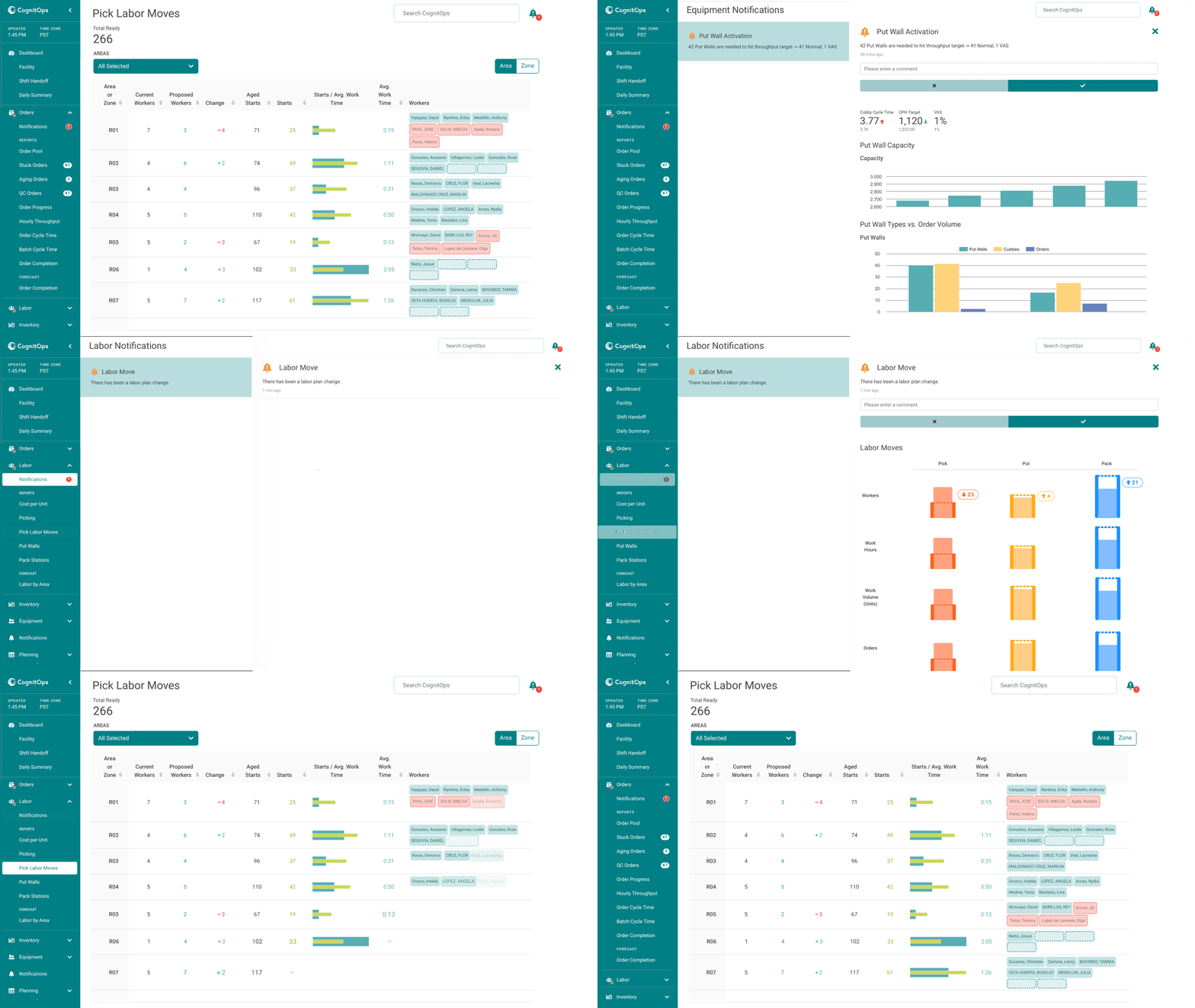
CognitOps replaces Excel spreadsheets and tribal knowledge with automated analytics dashboards powered with machine learning, adding an intelligence layer to your existing order and warehouse management systems.
Operations managers, floor supervisors and supply chain executives can utilize CognitOps Align’s modules for Picking, Inventory, Receiving, and Shipping to see real-time tracking against KPIs, proactively allocate labor, alleviate trouble spots, and facilitate faster order fulfillment to meet your omni-channel delivery SLAs.
With CognitOps’ low-IT-lift cloud implementation, companies can reduce labor costs up to 35% and improve warehouse metrics in as little as 2 months with visibility from the DC floor across your warehouse network.
See how CognitOps can help you meet your SLAs and cut warehouse labor costs…